Flow assurance, executed perfectly — and now it never sleeps.
Midstream is a promise business: the product moves when you said it would, in the condition you said it would, with the paperwork to prove it. We built our practice on keeping that promise across truck, rail, and river dock — and then we built a proprietary software layer that holds the line around the clock.
truck · rail · river dock · faster cycle times and higher labor efficiency, held around the clock
Operate yours
Our team takes over day-to-day responsibility for a customer-owned terminal so that the owner can focus on commercial decisions instead of shift coverage and safety inspections. This is contract operations at the facility level — not a consulting engagement, but a standing commitment to keep the asset running to standard.
What that covers:
- Staffing and training — our team provides or supplements the operator workforce and runs the training program: classroom, hands-on, and recurring competency checks.
- Maintenance planning — scheduled and corrective maintenance tracked against a written program; equipment history documented so nothing gets deferred until it fails on a Saturday night.
- Safety program management — OSHA-compliant written programs, regular safety meetings, incident investigations that close with a corrective action, not a conversation.
- Weights & measures and bill-of-lading integrity — every load ticketed correctly the first time; meter calibration records current; no BOL leaves the terminal with an error that costs someone a claim.
- Inventory reconciliation — net-quantity accounting applied consistently so that what enters and exits the facility balances, and discrepancies surface early.
- Regulatory compliance — SPCC, PHMSA, FRA, and EPA obligations managed as a standing discipline, not a pre-inspection scramble.
Build and operate for you
When a customer needs a new terminal — or a significant capacity expansion — we develop, engineer, construct, commission, and then run it. The customer gets a finished operating facility without having to build an in-house project team and then hand it off to an operations team that never touched the original design.
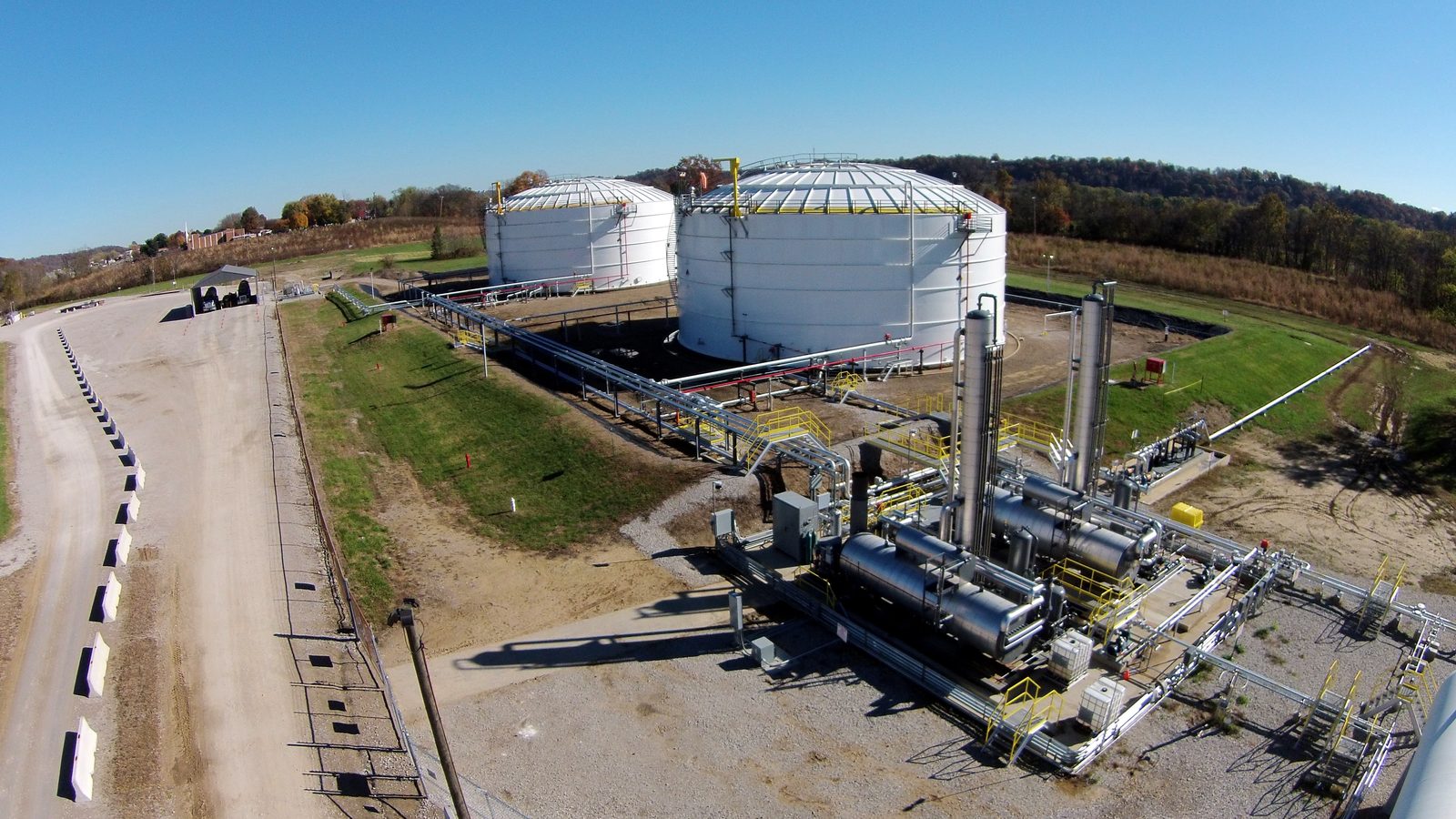
Our current flagship terminal is proof of that model: our team built it from bare ground and operates it today, with every process decision made by the people who will run it long-term. Across two decades our team has also constructed and commissioned select facilities ranging from river-dock terminals on the Ohio to crude handling infrastructure in the Rockies — projects that involved civil work, mechanical installation, utility tie-ins, instrumentation, and regulatory permitting through to final startup.
Design, commissioning & startup support
Not every engagement requires us to hold the operating contract. Some customers have their own crews and want operator-perspective input at the design stage or professional support through commissioning and first-fill.
We bring crude truck-to-rail process design experience, formal pre-startup safety review (PSSR) practice, and startup procedures grounded in what actually goes wrong when a new facility runs product for the first time. The result is a design that the operators can maintain, a commissioning sequence that catches problems before they become incidents, and a startup that finishes on schedule rather than getting extended by a punch list that should have been closed at the factory.
If it moves product, we've run it
Our material-handling experience runs wider than crude, and wider than any single mode. The equipment types our team has operated or commissioned include:
- Pumps — centrifugal and positive-displacement
- Metering and loading skids
- Loading arms — top and bottom
- Blowers and pneumatic transfer systems
- Compressors
- Belt and drag conveyors
- Scales and weigh-in-motion systems
- Railcar movers
- Heating systems and specialty transfer equipment
Different commodities, same standard: engineered transfer, documented custody, zero shortcuts.
AI-native, by design
What makes this practice different is not the resume — it is what runs the terminal today. A proprietary operations layer watches the operation continuously: overfill guard, camera-based railcar tracking, network health, crew scheduling. The two-decade playbook is still the foundation; the software is what executes it perfectly, every hour of every day.